
GLHA Releases Important Cancer Disparities Report

David-Turcotte-cancer-disparities-for-webReport: Greater Lowell cancer rates higher than statewide
Poor, uninsured, immigrant populations at increased risk
By Grant Welker, gwelker@lowellsun.com
UPDATED: 09/27/2015

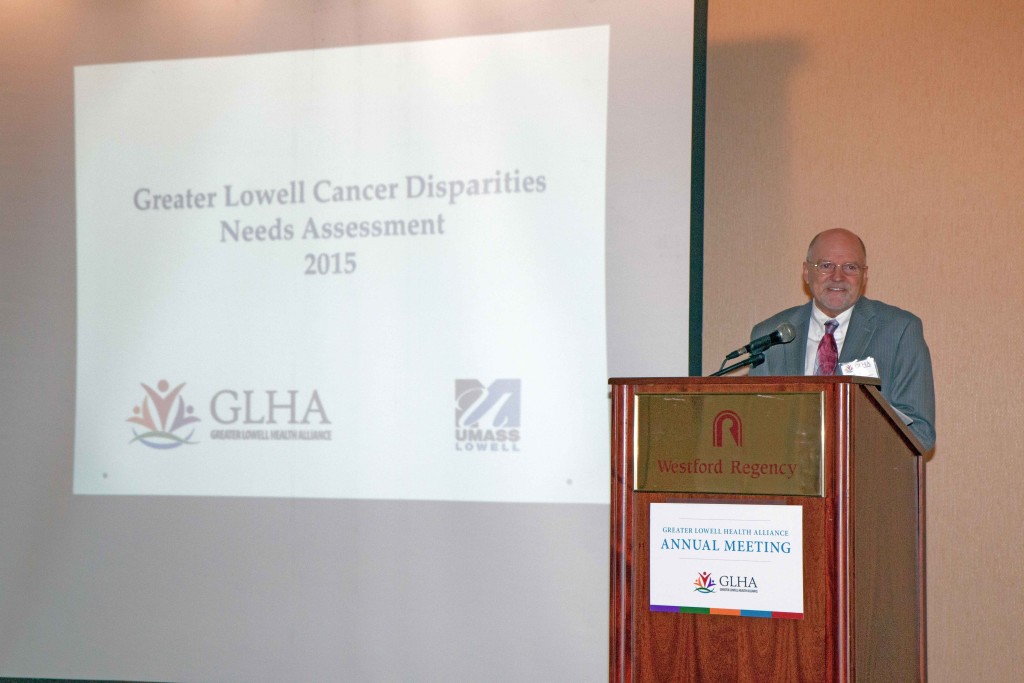
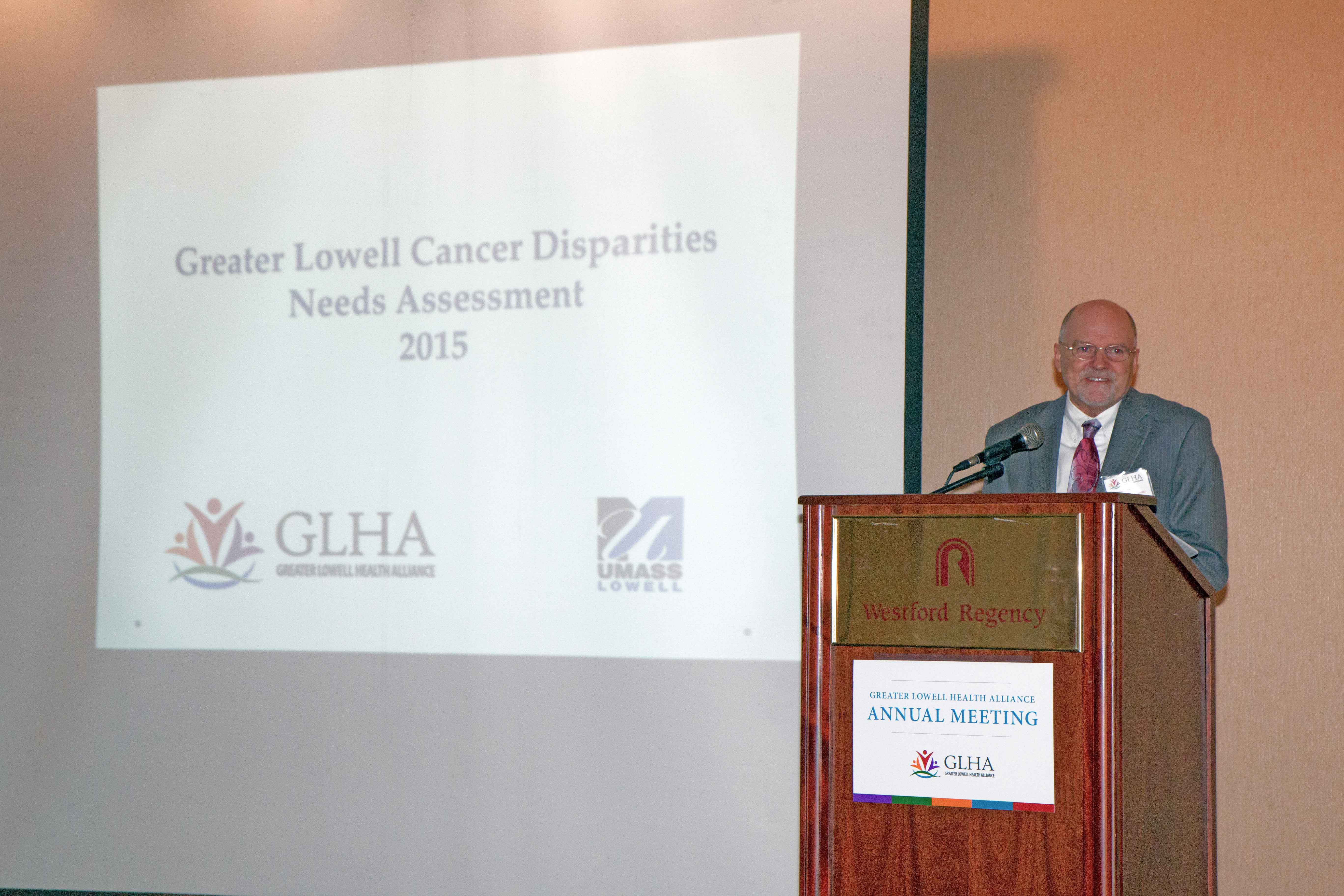
WESTFORD — Residents in Greater Lowell have higher cancer rates than the rest of the state, with the highest rates among poorer residents, according to a new report from the Greater Lowell Health Alliance and UMass Lowell.

Improving those rates, officials said Friday, will require better outreach to the poor, minorities, immigrants and people who are underinsured or have no insurance — all segments of the population found to be at higher risk of cancer.

Greater Lowell’s overall cancer death rate is 225 per 100,000 residents, according to the report. The statewide average is 185.

Cancer rates in the Lowell area were highest for lung cancer, at 80 per 100,000 residents. The statewide average for lung cancer is 70.

For someone who works more than one job, doesn’t speak English as a primary language, or faces other cultural factors, having a primary-care physician or following up on medical appointments aren’t always as high of a priority, said David Turcotte, a research professor at UMass Lowell who presented the study’s findings Friday at the Greater Lowell Health Alliance’s annual meeting.

“For those of lower socioeconomic status, health care is a luxury,” he said.

Risk factors are “primarily related” to income levels, the report said, with a “lack of awareness of cancer risk” in some segments of the population.

“Providers, professionals and key informants felt overall that patient perception of cancer in the Lowell area is poor,” the report said, and “that patient perception of care in Boston is better.

“The Lowell area studied includes Billerica, Chelmsford, Dracut, Dunstable, Lowell, Tewksbury, Tyngsboro and Westford. Data are not broken out by individual community.

Recommendations in the report call for increasing awareness, improving access and advocacy for patients, expanding interpreter services, and providing better transportation for those who require it to get to medical appointments.

Members of the Lowell Community Health Center, which serves many lower-income residents, said proper outreach and accommodation of the city’s diverse population are important in making a healthier community.

“We’re talking about cancer specifically, but cultural disparities are across all medical areas,” said Sheila Och, a deputy director at the health center. “We work on health care but we also work on social justice.”

Rates of cancer also differ among races, said Christopher Lathan, a faculty director for cancer-care equity at the Dana-Farber Cancer Center in Boston. Minorities tend to get lower levels of care, and the gap between white and black residents has not narrowed in cancer survival, even as overall rates have dropped, he said.

Many black residents see Dana-Farber as “a place where rich white people go to die,” Lathan said. “That’s really disturbing at many levels.”

Read the Lowell Sun article on GLHA’s groundbreaking report on cancer rates and disparities in Greater Lowell. 
 

A Call to Action: Greater Lowell Leaders Collaborate to Combat Opioid Epidemic

Marian-Ryan

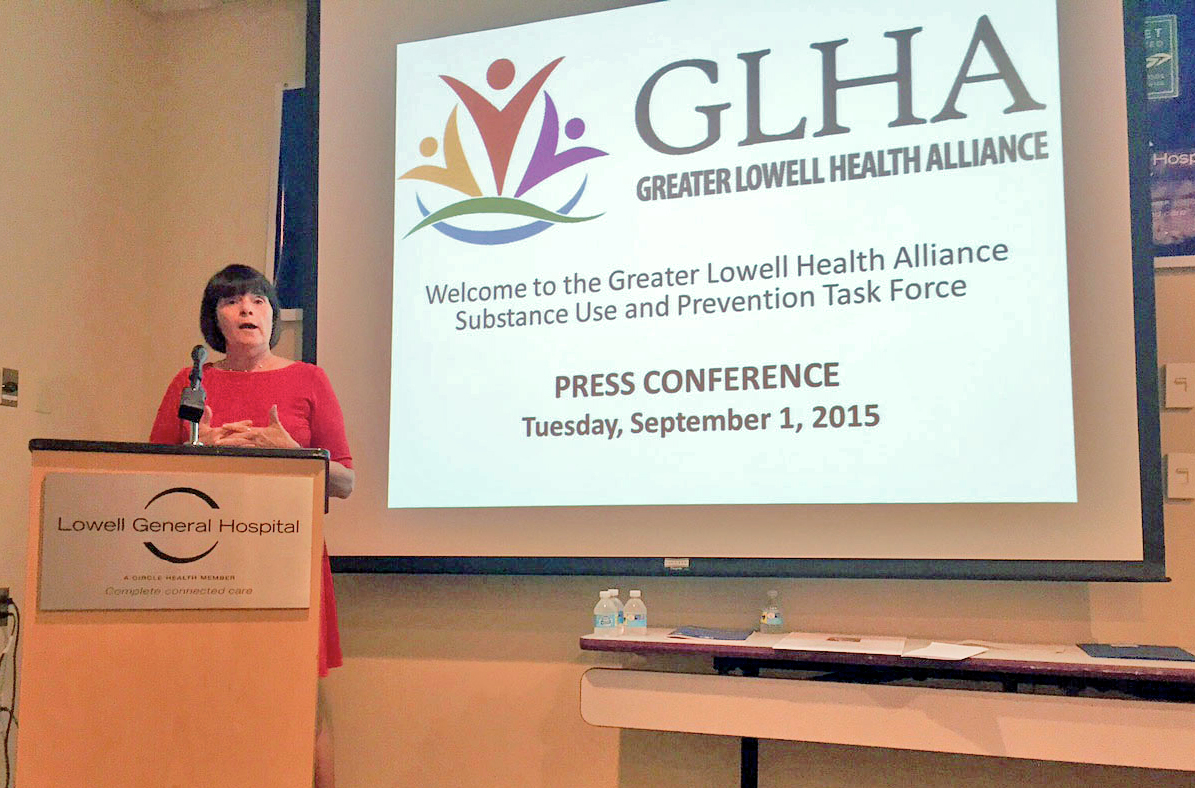
The Greater Lowell Health Alliance, in partnership with Middlesex Community College, kicked off National Recovery Month with a September 1 forum addressing the critical opiate crisis in Greater Lowell.

A group of nearly 100 members of the media and community gathered at Lowell General Hospital’s Saints Campus  for the “Communities Join Forces to Prevent Substance Abuse” forum, featuring insights from GLHA Executive Director Kerrie D’Entremont, Lowell City Manager Kevin Murphy, Lowell Police Superintendent William Taylor, and Middlesex County District Attorney Marian T. Ryan. Terrence Downes, Executive Director of Middlesex Community College program on homeland security, served as moderator.

The weekend prior to the forum, two people in Lowell died of an opiate overdose. Four more were saved by Narcan administered by Lowell police, who were equipped with the life-saving drug in August.

These examples further intensified the spirit of collaboration and commitment of the leaders gathered to take action to stem the opiate crisis.

“We know this issue is blind to borders and is affecting each of our communities,” said D’Entremont.

In 2014, there were 145 drug-related deaths in Middlesex County, with 103 of them being attributed to heroin. As of Aug. 28, the county has already seen 131 drug-related deaths, with 99 of them attributed to heroin, according to Ryan.

“These numbers tell a very, very tragic tale, and one snippet gives you an idea of how many people are being affected by this epidemic,” she said.

September and October of 2015 are National Recovery Month & National Substance Abuse Prevention Month, respectively. The Substance Use and Prevention Task Force of the Greater Lowell Health Alliance is working to increase education, awareness and prevention efforts to help alleviate the crisis.

See the Substance Use and Prevention Task Force Calendar of Events.

Last year, the GLHA awarded $500,000 in grants and program assistance to the Greater Lowell Community, $200,000 of which was dedicated to substance abuse and prevention. On Tuesday, D’Entremont announced a new request for proposals for $50,000 in Community Health Initiatives Grants, which will go toward several public health priorities, including substance abuse.

“The GLHA is committed to working with our communities, and substance abuse is a top priority,” D’Entremont said. “This problem is affecting all our communities and the only way we’re going to win this battle is by working together.”

Ryan introduced three new initiatives her office will undertake to more more aggressive in preventing substance abuse:

  • Working with mental health partners and police chiefs across the county to introduce a Trauma-Informed Response Program to immediately help children present during an overdose.
  • A program that targets young women at access points where they are open to education, particularly before, during or just after pregnancy, in response to the rising number of women struggling with addiction.
  • A new model of drug court that intervenes at the very beginning stages of addiction.

“We cannot do this alone, and that’s why this gathering is so important,” Ryan said. “It represents a recognition of that need we have for each other and the need we have to take what we have learned so far in this work, look forward and do the next phase of that work.”

Lowell City Manager Kevin Murphy praised the combined efforts of agencies across Lowell and Middlesex County for their commitment to combating opioid abuse.

“It’s only by all of us working together, not just in the City of Lowell but the Greater Lowell area,” Murphy said. “So I ask all of you to join with us in combatting this scourge in our society and rid substance abuse.”

Lowell Police Superintendent Bill Taylor also stressed the need to work together.

“Clearly we cannot do this alone,” Taylor said. “We need the police and the community to collaborate together. We need to be able to identify and eliminate this problem, and evidence shows that collaboration between police and civilians who live in our community has success in ridding our community of drugs.”

Read the coverage of the GLHA’s efforts to address the opiate crisis in the Boston Globe and the Lowell Sun and the Westford Eagle. 

// social