
Event Categories: Training
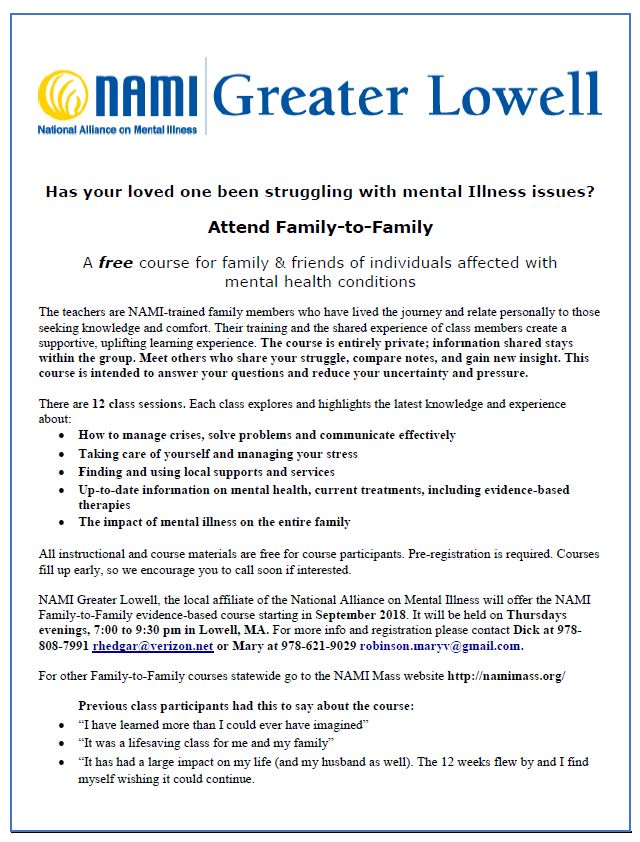
Family-to-Family Mental Health Course (12 Weeks)
Emotional CPR Training Workshop

GLHA Grant Info Session: CLAS Standards & Cultural Competency
Riverside Trauma Center’s 8th Annual Conference
Riverside Trauma Center’s Annual Conference
This year’s topic is “Integrating Treatment: Exploring the Links Between Trauma, Substance Use, and Other Co-Occurring Conditions.” Please see below for details.
Every year Riverside Trauma Center holds a cutting-edge conference highlighting current trends, research, and approaches in the fields of trauma, suicide prevention, and resilience. The conference is a great opportunity to gain insight and knowledge about these topics and to network with peers.
Riverside Trauma Center’s 8th Annual Conference
September 21, 2018
“Integrating Treatment:
Exploring the Links Between Trauma, Substance Use,
and Other Co-Occurring Conditions“
Early Bird Registration Deadline 8/17/18
Conference Description:
Current increases in opioid overdoses and enhanced understanding of the neurophysiology of addictions have led to both the need and the capacity for more in-depth and complex understanding of substance use, addictions, and their treatment. This conference will examine the various ways in which trauma, addictions, and co-occurring disorders intersect. Our speakers and panelists will address how trauma often increases engagement in health-risk behaviors; how these behaviors and the ways in which society traditionally responds to them, may in turn cause increased toxic stress; and what can be done to address these complicated interactions.
When/Where:
September 21, 2018; 9 a.m.-4:30 p.m.; The Verve, Crowne Plaza, 1360 Worcester Street (Rte. 9), Natick, MA
Learning Objectives:
- Describe aspects of a treatment model that addresses both trauma and substance use.
- List ways in which experiences of trauma may lead to substance use as well as ways in which substance use may lead to trauma in the lives of users and their families and friends.
- Describe trauma sensitive strategies that first responders may use when engaging people using substances.
- Name three ways in which toxic stress impacts people’s brains and bodies and thereby increases the likelihood of developing addictions.
- Describe how topics in the “Finding Your Best Self” model relate to phase-based treatment for trauma and/or addiction.
For more information, please visit here.
Schizophrenia: How to Recognize It and How to Help
Schizophrenia: How to Recognize It and How to Help
Tuesday, August 7, 2018 (1:00 – 2:30 pm)
Torigian Senior Center, 75R Central Street, Peabody, MA 01906
Many practitioners remain mystified of what schizophrenia is and how to best to help somebody with schizophrenia.
This presentation attempts to improve the ability of providers to recognize and respond to schizophrenia by addressing the following:
- Description of core symptoms of schizophrenia.
- Exploration of treatment goals for persons living with schizophrenia across the life span.
- Presentation of common side effects of antipsychotic medications
- Strategies for working constructively with persons living with schizophrenia
- Understanding the critical role of community in the treatment and support of persons living with schizophrenia
Presenting will be Oliver Freudenreich, MD, FACLP. Dr. Freudenreich is the Co-Director of the Massachusetts General Hospital (MGH) Schizophrenia Clinical and Research Program and Director of the MGH Fellowship in Public and Community Psychiatry. He is also a deputy editor for the journal Psychosomatics. Dr. Freudenreich has published extensively in his areas of interest and written a handbook on psychotic disorders.
Social Work, Nursing, LADC, and CDP (Certified Dementia Practitioner) continuing educational credits are being pursued.
To register, please email dcollier@glss.net .
Registration spaces are offered on a first come first served basis.
There is no charge for this training.
Positive Youth Development Training
Positive Youth Development Training
Hosted by: The Essex County Asset Builder Network & the Mystic Valley Public Health Coalition
Day 1 – Positive Youth Development: Morning session will focus on the research and theory behind positive youth development and provide examples of models that have been used to implement this this approach, including but not limited to the 40 Developmental Assets. Theory of levels of youth engagement will also be covered. The afternoon session will cover strategies and best practices for engaging all community sectors in youth development. We will review the intersection of the Youth Assets Model with the Strategic Prevention Framework and will hear from our local partners about experiences they have had utilizing this approach and have time for discussion, collaboration and brainstorming.
AM – Positive Youth Development 101
- Overview of positive youth development approach
- Introduction to 40 Developmental Asset Approach
- Youth engagement
PM – Engaging Community, Implementing a PYD approach
- Overlap between SPF and PYD
- Engaging youth in environmental and policy change
- Strategies for implementing PYD approach in communities
- Best practices and discussion
Day 2 – Developmental Relationships: will feature SEARCH Institute Trainer Kelly Felton presenting on the Developmental Relationships framework www.search-institute.org/developmental-relationships
Young people are more likely to grow up successfully when they experience developmental relationships with important people in their lives. Developmental relationships are close connections through which young people discover who they are, cultivate abilities to shape their own lives, and learn how to engage with and contribute to the world around them. Search Institute has identified five elements—expressed in 20 specific actions—that make relationships powerful in young people’s lives.
For more information or questions, please contact Lauren Dustin at (781) 475-5645 or at ldustin@medford-ma.gov
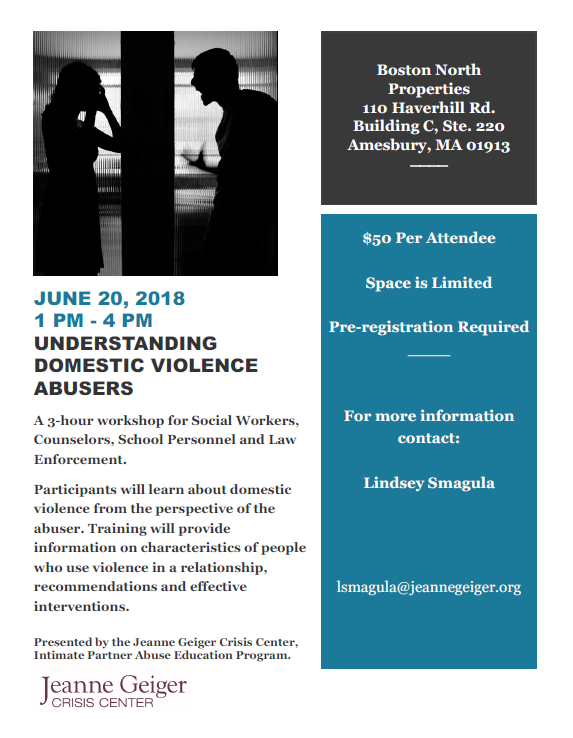
Understanding Domestic Violence Abusers Training
Recognizing Signs of Problem Gambling
Lowell Community Health Center’s CHEC Presents:
Recognizing Signs of Problem Gambling
Thursday, May 24, 2018
9:30 AM – 4:00 PM
Gambling is unlike most other addictions in that it is often “hidden” from view. The immediate effects of a gambling addiction are not readily visible, as with substance disorder. It is frequently not identified as a problem until it is in a critical stage for the individual and their family.
This FREE interactive training is designed to help Community Health Workers from the Southeast region of Massachusetts understand the issues surrounding problem gambling, recognize when a client may be experiencing problems with their gambling and refer them to appropriate resources to receive assistance.
After attending this training, Community Health Workers will be able to:
- Define gambling disorder
- Identify gambling activities
- Identify similarities and differences between problem gambling and substance abuse/addiction
- Explain the prevalence of gambling in the U.S. and Massachusetts
- Explain the difference between gambling and problem gambling
- Recognize the signs and symptoms of problem gambling
- Identify sources for further assessment, referral, and resources
Participation Includes:
- $150 stipend to cover travel expences for CHWs serving the Southeast region of MA
- Certificate of Successful Completion
Disbility Awareness and Cultural Competence Training
The Northeast Independent Living Program (NILP) will be holding a one-day Disability Awareness and Cultural Competence Training throughout the year. 2018 Training Dates are as follow:
April 24th
May 16th
June 28th
July 18th
August 15th
September 27th
October 11th
November 16th
December 19th
Please contact at least two weeks prior to the training date to allow for proper accommodations. Limit 4 slots per organization.